









A living room without a rug is like a sentence without a full stop. Something feels unfinished. The moment you lay the right rug down, the whole room clicks into place, the furniture feels anchored, the colours make sense, and the space finally feels like home.
But choosing a handmade rug? That's where things get interesting. There are so many beautiful options that it's easy to feel overwhelmed. So let's slow down and talk through it properly, the way a designer would over a cup of coffee.
Why Handmade Rugs Are Worth It
Before we get into the how, let's talk about the why. Handmade rugs are not just floor coverings. They're crafted objects. Each one carries the time, skill, and intention of the artisan who made it. The knots are tied by hand. The patterns are woven with purpose. The materials are chosen for longevity, not just looks.
That's why a well-chosen handmade rug doesn't just decorate a room, it defines it. It adds warmth, texture, and a quiet sense of quality that machine-made rugs simply can't replicate. And over time, as the fibres soften and the colours settle, a handmade rug only gets better.
At The Design House, every rug in the collection is selected with this in mind. Craftsmanship first. Beauty second. Longevity always.
Start With Size — It Matters More Than You Think
The most common rug mistake? Going too small. A rug that floats in the middle of the room with furniture legs dangling off the edges looks awkward and makes the space feel smaller, not larger.
Here's a simple rule: in a living room, aim for a rug that allows all four legs of your sofa to sit on it, or at the very least, the front two legs. This creates a visual boundary that pulls the seating area together and makes the room feel intentional.
For a standard living room, a 200 x 300 cm rug is a solid starting point. Larger rooms can carry a 250 x 350 cm or even bigger. When in doubt, go up a size — you can always style around a generous rug, but you can't fix one that's too small.
Think About Layout Before You Shop
Your room's layout should guide your rug choice as much as its size. An open-plan living space needs a rug that clearly defines the seating zone without closing it off. A more intimate room benefits from a rug that creates a cosy, contained feel.
If your sofa faces a fireplace or a feature wall, orient the rug to reinforce that focal point. If your layout is more fluid, say, a corner sofa or a circular arrangement, a round rug can work beautifully to echo the shape and soften the geometry of the space.
The goal is always the same: the rug should make the layout feel deliberate, not accidental.
Choose Your Material Based on How You Actually Live
This is where honesty pays off. A stunning silk rug looks extraordinary — but if you have young children or a dog who treats the sofa like a trampoline, it's going to cause you stress, not joy.
Here's a quick guide to the most popular handmade rug materials:
Wool is the gold standard for living rooms. It's durable, naturally stain-resistant, soft underfoot, and ages beautifully. TDH's hand-knotted wool rugs are a favourite for good reason — they hold their shape, their colour, and their character for decades.
Silk adds an unmatched luminosity and sheen. It catches the light in a way that wool simply doesn't. Best suited to lower-traffic areas or formal living rooms where it can be admired without too much wear.
Wool-silk blends offer the best of both worlds — the durability of wool with the subtle lustre of silk. If you want something that looks elevated but can handle real life, this is often the sweet spot.
Natural fibres like jute and seagrass bring an organic, earthy quality that works beautifully in relaxed, nature-inspired interiors. They're less soft underfoot but add wonderful texture and a grounded, casual feel.
Colour: The Mood-Setter of the Room
Colour is where most people either play it too safe or go too bold. The trick is to treat the rug as part of a conversation with the rest of the room — not a solo performance.
If your walls and furniture are neutral, the rug is your opportunity to introduce warmth, depth, or a hint of personality. A deep terracotta, a dusty sage, or a rich indigo can transform a beige room from bland to beautiful without overwhelming it.
If your room already has strong colours or patterns, a more tonal rug one that picks up a shade already present in the space will tie everything together without competing for attention.
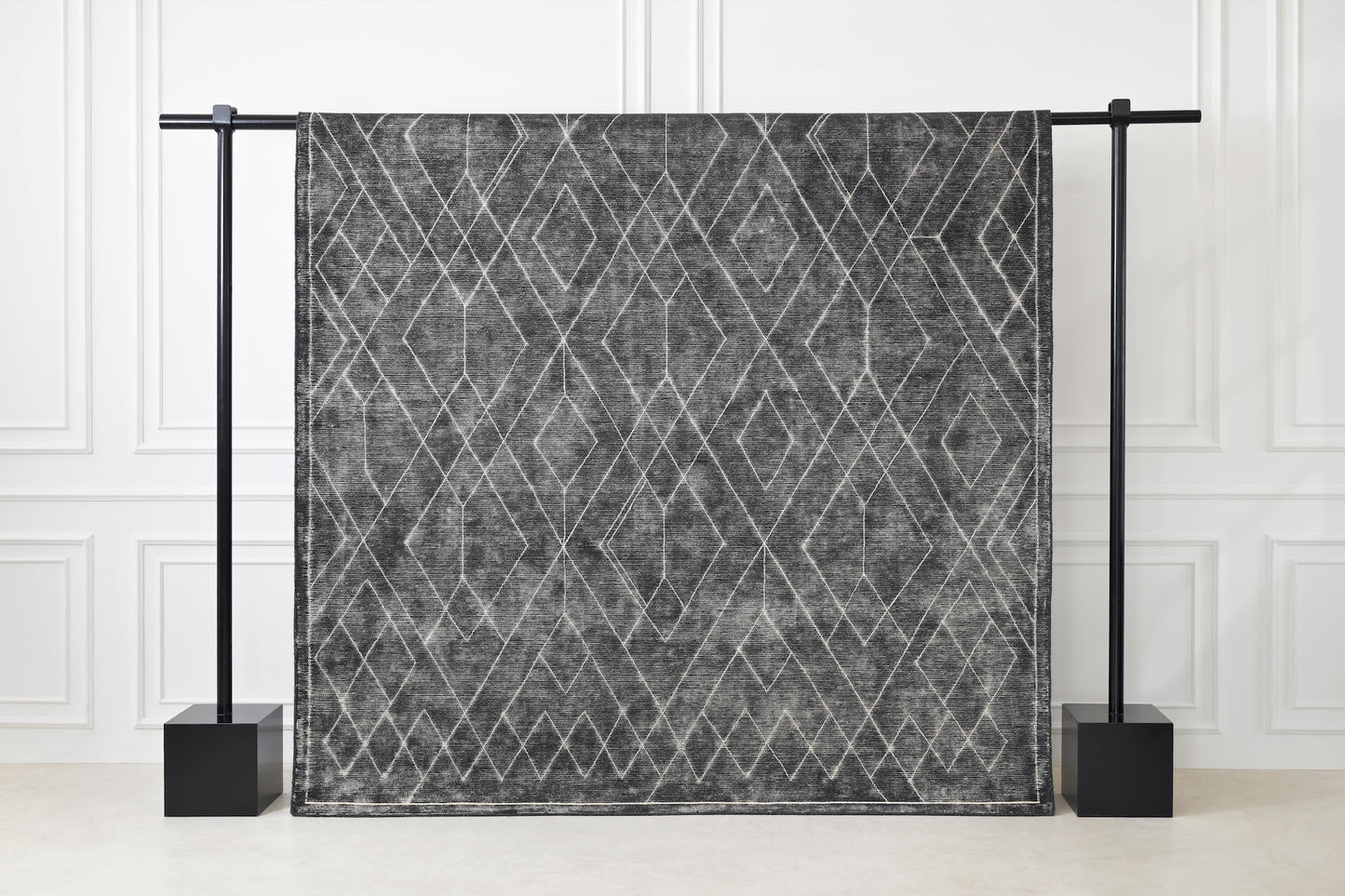
TDH's handmade rug collection spans a considered palette, from warm neutrals and earthy tones to richer jewel shades, all chosen to complement modern interiors without feeling trend-dependent.
Texture Adds the Layer You Didn't Know You Needed
Even in a room with a carefully curated colour palette, texture is what makes a space feel alive. A flat-weave rug reads differently to a high-pile one. A hand-knotted rug with a slightly irregular surface has a depth that a machine-made rug can't fake.
In a modern, minimal interior, a rug with subtle texture a gentle loop pile, a tonal geometric pattern, or a softly distressed finish adds warmth without visual noise. In a more layered, eclectic space, a bolder texture can anchor the room and give it a sense of richness.
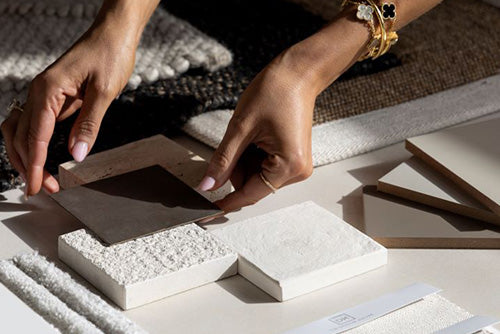
Don't be afraid to touch the rugs before you decide. The way a rug feels underfoot is part of the experience of living with it.
Practical Styling Tips You Can Use Today
A few things that make a real difference once the rug is in place:
Always use a rug pad. It keeps the rug from slipping, protects the floor underneath, and adds a little extra cushioning. It also extends the life of the rug significantly.
Rotate your rug every six months if it's in a sunny spot. This prevents uneven fading and keeps the wear consistent across the surface.
Vacuum regularly but gently, always in the direction of the pile, never against it. For deeper cleaning, consult a specialist. Handmade rugs deserve proper care.
Layer if you're feeling adventurous. A smaller, more decorative rug placed over a larger neutral one is a designer trick that adds depth and personality to a living room without requiring a full redesign.
The Right Rug Changes Everything
A handmade rug is one of the most impactful investments you can make in a living room. It grounds the furniture, softens the acoustics, adds warmth underfoot, and brings a layer of craftsmanship that elevates the entire space.
The key is to choose with intention to think about how you live, what you love, and what the room is asking for. When those things align, the right rug doesn't just fit the space. It completes it.
Explore The Design House's handmade rug collection and find the one that feels like it was made for your home. Because in many ways, it was.

Frequently Asked Questions
What size rug is best for a living room?
For most living rooms, a rug between 200 x 300 cm and 250 x 350 cm works well. The key is to ensure the front legs of all your main seating pieces sit on the rug this anchors the furniture and makes the space feel cohesive. If you're unsure, use masking tape on the floor to map out the size before you buy. Almost everyone who does this ends up going bigger than they originally planned.
Are handmade rugs better than machine-made rugs?
In most cases, yes, especially for a living room where the rug is a focal point. Handmade rugs are crafted from higher-quality materials, built to last for decades, and carry a depth of texture and character that machine-made rugs can't replicate. They also tend to improve with age rather than deteriorate. The upfront investment is higher, but the cost per year of a well-made handmade rug is often lower than replacing a cheaper one every few years.
What is the best material for a living room rug?
Wool is the most practical and popular choice for living rooms. It's naturally resilient, easy to maintain, soft underfoot, and holds colour beautifully over time. For a more luxurious look, a wool-silk blend adds a subtle sheen without sacrificing durability. If your living room is more of a formal showpiece than a daily gathering space, a pure silk rug can be breathtaking, just keep foot traffic in mind.
How do I keep a handmade rug looking its best?
Regular, gentle vacuuming in the direction of the pile goes a long way. Use a rug pad underneath to prevent slipping and reduce wear on the base. Rotate the rug every six months if it sits in direct sunlight to avoid uneven fading. For spills, blot immediately, never rub. And for a deep clean, always go to a professional who specialises in handmade rugs. They'll know exactly how to treat the fibres without causing damage.
Can I use a round rug in a living room?
Absolutely. A round rug works especially well in living rooms with a circular or curved furniture arrangement, or in spaces where you want to soften a lot of hard angles. It's also a great choice for smaller rooms where a rectangular rug might feel too rigid. The key is scale, a round rug needs to be generous enough to sit under the main seating pieces, not just float in the centre of the room like a decorative mat.
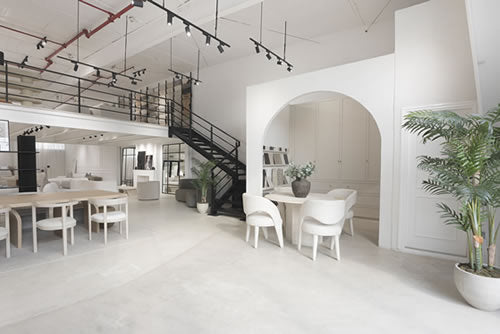
Visit our showroom or explore our collection online, and let our design team help you create something truly made for you.
Showroom:
22nd St - Al Quoz - Al Quoz Industrial Area 3 - Dubai, UAE
Phone:
+971 50 111 6506
Email:
info@thedesignhousedubai.com