



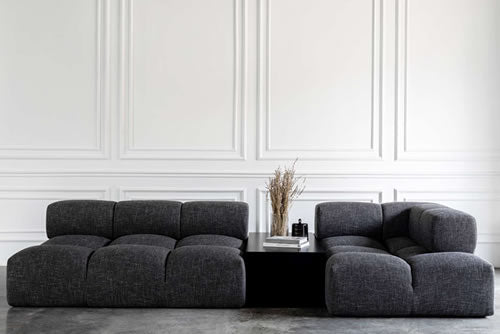
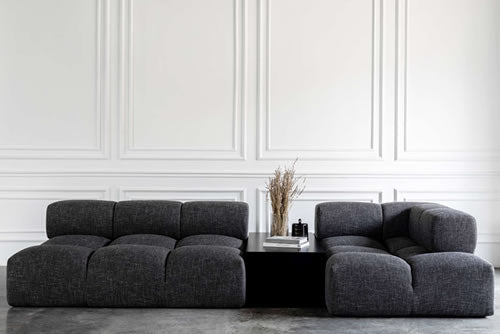






A sofa becomes a sectional the moment it's built from two or more separate seating pieces joined together to form one larger unit, instead of a single fixed frame. That's the only real requirement. It doesn't have to be L-shaped, it doesn't have to be huge, and it doesn't have to be modular, it just needs to be made of connected sections rather than one continuous frame. Everything else (the shape, the size, whether it's fixed or reconfigurable) is a variation on that one basic idea.
It's a term that gets used loosely, plenty of people call any large corner sofa "a sectional" without thinking about why, but the actual definition is simpler and more specific than most people assume, and understanding it makes the rest of the buying decision a lot easier.
The one thing that actually defines a sectional
Take a standard three-seater sofa: one frame, one continuous back, one continuous seat cushion run. Now imagine cutting that concept apart into distinct sections, a corner unit, an armless middle piece, a chaise, and joining them edge to edge instead. That's a sectional. The defining feature is the construction, not the shape.
This is why a straight three-piece sofa, an L-shaped sofa, a U-shaped sofa, and a curved sofa can all technically be sectionals, as long as they're built from separate connected sections rather than one solid frame. The L-shape just happens to be the most common configuration, which is probably why people default to using the words interchangeably, we've actually broken down that specific distinction in more detail in Sectional Sofa vs. L-Shaped Sofa: What's Actually the Difference? if you want the fuller comparison.
The three things that vary within "sectional"
Once you know the core definition, the differences between sectional types come down to three variables:
Shape — L-shaped, U-shaped, curved, or straight (a straight sectional is really just two or three armless sections placed in a row, which is easy to forget counts as a sectional too).
Fixed vs. modular — some sectionals are sold as one confirmed configuration you can't change later; modular sectionals are made of individual pieces, like our Cloud Corner, Cloud Middle, and Cloud Ottoman — that can be rearranged or added to over time. If you're weighing that flexibility against a fixed piece, our guide on custom furniture vs. ready-made covers a similar trade-off between commitment and flexibility.
Size — sectionals range from compact two-piece sofas suited to an apartment living room right up to large U-shaped configurations built for bigger villa spaces.
At The Design House, our sectional sofas collection spans all three of these variables, from tailored L-shapes to individual modular components you can build a layout from yourself.
Should I get two sofas or a sectional?
This genuinely depends on how you use the room, more than how it looks in a photo. Here's how we'd think about it:
A sectional tends to work better when:
- You have a defined corner or wall of the room to anchor
- Most of your seating happens facing one direction, toward a TV, a fireplace, a view
- You want a single, cohesive look without visual breaks between pieces
- The room is large enough that filling it with one big piece won't crowd it
Two separate sofas tend to work better when:
- You want more flexibility to rearrange the room for different occasions
- Conversation and facing seating matters more than lounging toward one focal point — two sofas facing each other across a coffee table is a much easier layout for actually talking to people
- The room is a slightly awkward shape that a single large sectional wouldn't sit well in
- You like the idea of mixing two different fabrics, colours, or even two different sofa styles for a more layered look
If space is the deciding factor either way, it's worth reading our guide on choosing the right sofa size for a small apartment before committing to either option.
Neither option is inherently the "better" choice, it's a genuine trade-off between cohesion (sectional) and flexibility (two sofas). If you're still unsure, think about what you actually do most in the room: lounge facing a screen, or sit and talk. That single answer usually settles it.
Are sectional couches outdated?
No, but the type of sectional that feels current has shifted. The boxy, very deep, heavily cushioned sectional that was everywhere a decade ago has genuinely dated in a lot of interiors. What hasn't dated is the sectional as a concept, it's simply moved toward cleaner lines, lower profiles, and more tailored proportions.
What still reads as current: modular sectionals with clean, structured silhouettes, curved sectionals like our Ivy Sofa as a softer alternative to sharp right angles, and sectionals in performance or textured fabrics rather than glossy leather. Our piece on the Cloud Sofa covers the plush, low-profile end of this trend in more depth. What tends to read as dated: very deep, overstuffed cushioning with a "sunken" look, sectionals in a single flat colour with no textural interest, and configurations that were clearly chosen purely for maximum seating rather than how the room actually looks and functions.
So the honest answer is: sectionals aren't outdated, but a sectional bought without any real proportion or fabric consideration probably will be, eventually, the same as any large piece of furniture.
What makes a sofa look cheap?
This one comes up constantly, and it's rarely about how much the sofa actually cost, it's almost always one of these:
- Fabric that puckers or sags within the first year. Low-density foam and low-grade fabric lose their shape quickly, and a sofa that looks slightly deflated reads as cheap regardless of its original price tag.
- Visible frame or leg mismatch. Thin, flimsy-looking legs under a bulky frame, or the wrong metal tone against the rest of the room's hardware, is a small detail that has an outsized effect on how premium a piece looks.
- Overly shiny or plasticky fabric. Glossy pleather and very high-sheen synthetic fabrics tend to read as budget, even when the piece itself is well made.
- Wrong proportions for the room. A sofa that's too small for its space (or too large, crowding everything around it) looks like an afterthought rather than a considered choice, no matter the quality.
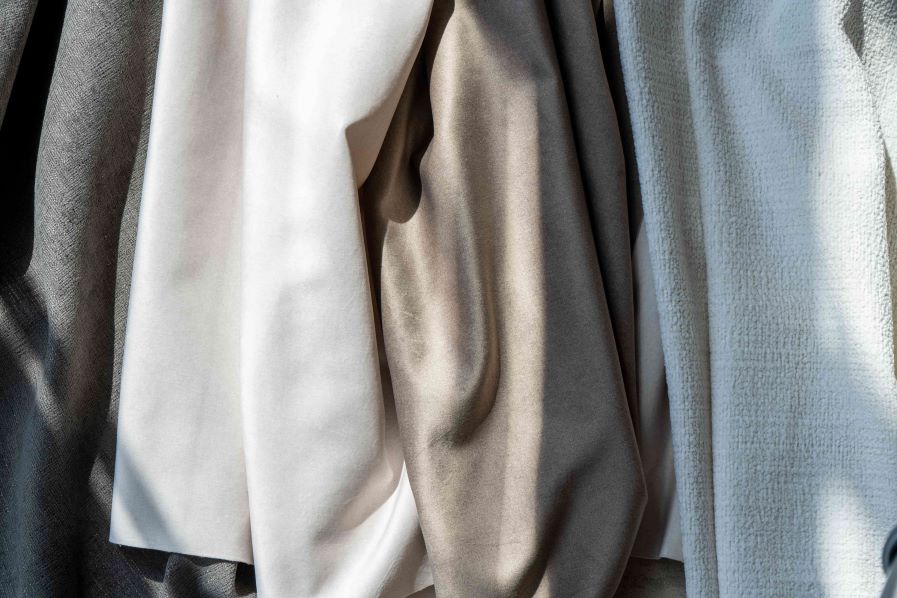
- No textural variation. A single flat, smooth fabric with nothing else going on tends to look flatter and less considered than a fabric with some visible weave or texture.
The pattern across all of these: it's rarely about spending more, it's about a handful of specific details, foam density, frame proportions, fabric texture, and leg finish, that most budget pieces cut corners on first.
Our take, and our pick
We build sectionals to order out of our own workshop in Al Quoz, which means the fabric, foam density, and frame proportions are decisions we make deliberately for every piece, not settled by whatever the factory had in stock. If you're deciding between an L-shape and a modular setup, our Byron Sofa or Maison Sofa from the L-Shape Sofas collection are the more straightforward choice for a defined corner and a cohesive look, while the Sectional Sofas collection, including the Cloud modules, gives you the option to reconfigure later. If your room needs a size or proportion no standard configuration quite covers, that's exactly what our bespoke furniture service is built for.
FAQs
Is an L-shaped sofa the same as a sectional?
An L-shaped sofa is one type of sectional, the most common one, but not the only one. U-shaped, curved, and straight multi-piece sofas are also sectionals, just in different configurations.
Can a sectional be split into two separate sofas later?
If it's modular, generally yes, individual sections can often be separated and rearranged into two smaller seating groups. A fixed, one-piece sectional isn't designed to be split apart.
Do sectionals work in small living rooms?
A compact two- or three-piece sectional can work well in a smaller room, especially in a corner configuration. Very large L-shapes or U-shapes are usually better suited to bigger, open-plan spaces.
What's the most timeless sectional style right now?
Clean-lined, lower-profile sectionals in a textured performance fabric tend to age better than very deep, overstuffed silhouettes — the same design principle that keeps most furniture from feeling dated: structured over slouchy.
Is a more expensive sofa always better quality?
Not automatically, but price often reflects foam density, frame construction, and fabric quality, the same details that separate a sofa that looks premium for years from one that starts sagging within twelve months.
How do I make a two-sofa living room layout look intentional rather than mismatched?
Keep at least one element consistent between the two, the same wood tone on the legs, a complementary (not identical) fabric family, or matching proportions, so they read as a considered pair rather than two unrelated pieces placed in the same room.