



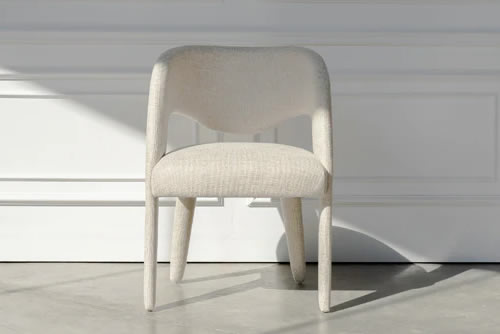
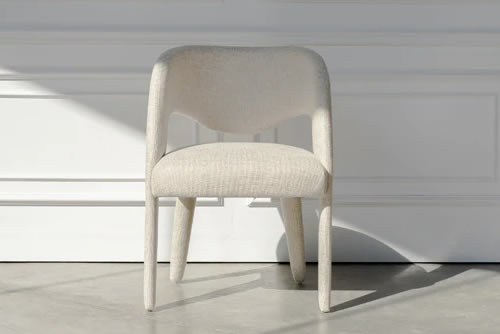





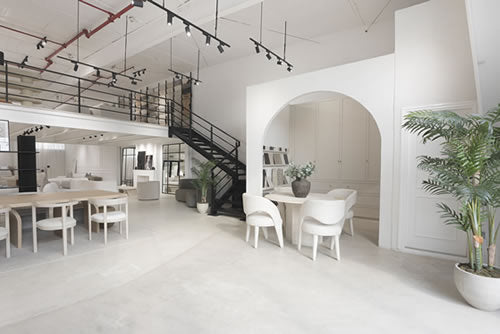
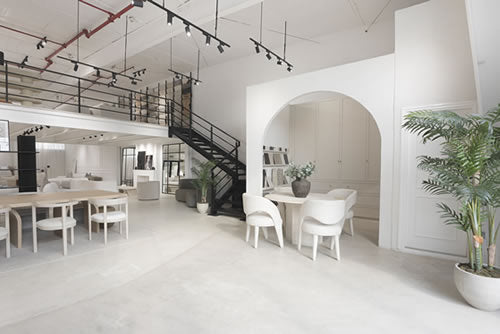


For most dining tables, the best setup isn't one or the other, it's armchairs at the two ends and side chairs along the sides. Armchairs give you that little extra support and presence where there's room to spare, and side chairs keep the long edges practical so you're not fighting for elbow room every time you sit down for dinner. If you only want one type for the whole table, go with side chairs, they're more forgiving, easier to tuck in, and work in almost any room. Armchairs are the better call when you actually have the space and want that slightly more formal, "settle in for a while" feeling.
That's the quick version. But if you're furnishing a proper dining room, especially one that's going to see big family lunches, long dinners with guests, or a table that was made to measure rather than picked off a shelf, it's worth understanding why that answer holds up, and where it doesn't.
What actually separates the two
An armchair has arms. A side chair doesn't. That's the whole definition, but the knock-on effects are bigger than people expect.
Arms change how much space a chair needs around it, whether it can slide all the way under the table, and how a person actually experiences sitting in it for two hours versus twenty minutes. A side chair is built to disappear a little, slim, easy to move, easy to tuck away when it's not needed. An armchair is built to be noticed. It takes up more room, sits a touch more formally, and tends to end up at the head of the table or wherever the host sits.
Neither is "better" in the abstract. It really comes down to how you use the table.
Why space is the first question, not the last
Every guide on this topic eventually gets to measurements, and for good reason, a beautiful chair that doesn't fit the table is just a beautiful chair sitting three feet further back than it should be.
As a rough starting point, plan for about 24 inches of table edge per person, and check the actual width of the chair you're looking at rather than assuming. Side chairs typically run somewhere in the 17-22 inch range depending on the design; armchairs are usually a touch wider once you account for the arms, though on a well-designed pair the difference is often smaller than people expect.
The measurement that actually trips people up isn't chair width, though, it's the table apron. That's the structural edge running underneath the tabletop, and it's what determines whether an armchair can slide in properly or gets stuck a few inches out. If you're buying armchairs for an existing table, measure from the floor to the lowest point under the apron, then check the arm height on the chair. You want roughly an inch or two of clearance so the arm clears the apron without knocking against it.
This is the single biggest reason people default to side chairs for the whole table, it just removes one measurement to worry about.
Comfort for long dinners
If your household tends to linger at the table, second helpings, coffee after dessert, conversations that run long, armchairs earn their keep. Having somewhere to rest your arms genuinely changes how a meal feels, and it makes standing up and sitting down easier too, which matters more than people admit once you've got older guests at the table.
That said, don't assume side chairs are automatically less comfortable. A well-built side chair with a properly shaped backrest, good seat depth, and quality upholstery can be just as pleasant to sit in for an hour as an armchair with a thin, flat cushion. Comfort has as much to do with how the chair is built as whether it happens to have arms.
Where the standard advice runs out
Here's where a lot of the generic buying guides stop being useful, and it's exactly where a lot of our clients' actual dining rooms begin.
Larger tables and bigger gatherings. Weekly family lunches with ten, twelve, or more at the table are completely normal in a lot of the homes we furnish, and that changes the calculation. All-armchair setups almost never work at that scale, the arms eat too much of the table's length, and you end up seating fewer people than the table was designed for. The two-armchairs-at-the-ends approach still holds, but for anything beyond a standard six-to-eight-seat table, it's worth having the chair dimensions worked out against the actual table length before committing, rather than assuming a "standard" spacing will translate.
Bespoke and made-to-measure tables. A lot of dining tables in this category aren't off a showroom floor, they're sized for a specific room, sometimes an unusual length or an extended family gathering table that seats far more than the standard eight. Standard chair dimensions were never built with that table in mind, so the smarter move is designing the chair alongside the table, not fitting a stock chair to a custom piece after the fact. That's a big part of why we build dining seating to match the table it's sitting at, rather than treating the two as separate purchases.
Material and construction. Almost none of the generic guides talk about what's actually holding the chair together, which is strange given how much it affects both comfort and longevity. A frame that's properly joined, rather than glued and screwed together at speed, is what keeps an armchair from developing a wobble after a year of daily use, especially since arms add extra stress points every time someone leans on them getting up. Upholstery matters too: a heavier fabric or a full-grain leather sits differently, wears differently, and honestly feels different under your hands than something thinner chosen mainly to hit a price point. If you're going to own the chairs for a decade rather than replace them in three years, this is where the real difference shows up, even though it rarely makes it into a buying guide.
How the chairs sit in the room. A dining chair doesn't exist on its own, it's next to a table, under a chandelier or pendant, against a backdrop of whatever's on the walls. In a room with higher ceilings or a more considered lighting scheme, armchairs at the ends genuinely change the visual weight of the whole table, giving it a clear beginning and end rather than a run of identical chairs. That's worth factoring in alongside the practical measurements, especially in a dining room that's doing double duty as a space for entertaining.
A simple way to decide
If you don't want to overthink it, this covers most situations:
-
Small dining room, or you need to maximise seats: go with side chairs throughout. Easier to fit, easier to live with day to day.
-
Standard rectangular table, six to eight seats: two armchairs at the ends, side chairs along the sides. This is the setup that works for the widest range of homes.
-
Round or square table: stick with matching side chairs. There's no natural "head" of a round table, and armchairs can make the arrangement feel unbalanced.
-
Long dinners and frequent entertaining are a priority: lean into armchairs wherever the room allows it.
-
Extended family table or a custom-length piece: work out the chair sizing against the actual table rather than assuming standard spacing will apply, this is where it's worth getting it measured properly rather than guessing.
Mixing armchairs and side chairs without it looking mismatched
Mixing works well as long as the two styles are clearly related rather than just similar. Keep two or three things consistent across both, the wood tone, the upholstery, the leg shape, the overall proportions, and the room reads as intentional rather than pieced together from two different orders. This is a lot easier to get right when the armchair and side chair were designed as a pair from the start, rather than sourced separately and matched up after the fact.
Where to go from here
If you're weighing this up for your own dining room, our dining chairs collection has both armchair and side chair options built to work together, including the Maddox Dining Chair and the Elara Dining Chair, both available across a range of fabrics and finishes. And if your table is a custom size or you're planning seating for a larger table than most guides account for, our team can work through the measurements with you and build the chairs to match, rather than trying to make a standard size fit a table it wasn't designed for.
Showroom:
22nd St - Al Quoz - Al Quoz Industrial Area 3 - Dubai, UAE
Phone:
+971 50 111 6506
Email:
info@thedesignhousedubai.com