



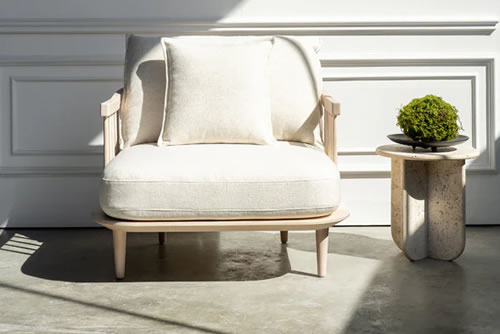
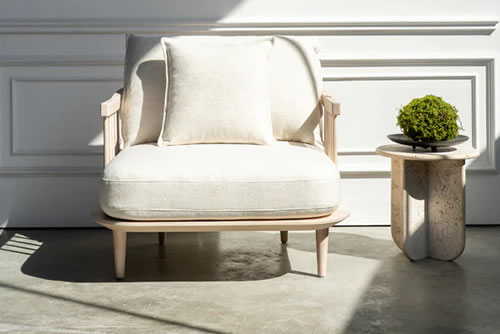
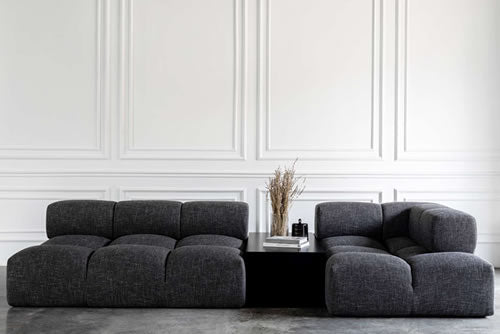
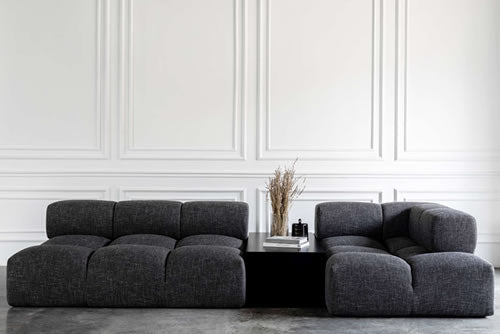






A client asked us last month why the sofa in a photo she loved had no back against the wall at all, just fabric on both sides facing opposite directions. That piece is called a double sided sofa, sometimes called a back to back sofa, and it solves a layout problem that comes up far more often in Dubai homes than most people realize.
At The Design House, we get asked about this piece almost every time a client is dealing with an open plan living and dining area that feels like one long, undefined room. Here is what a double sided sofa actually is, when it genuinely helps, and when it just adds clutter.
What a double sided sofa actually is
A double sided sofa has upholstery and a finished back on both sides, so it can sit in the middle of a room rather than against a wall. One side usually faces the living area, the other faces a dining space, a reading nook, or a hallway. Instead of a plain fabric back that only looks good from one angle, both sides are designed to be seen and used.
It is different from a sectional or an island sofa in one key way. A sectional is built to wrap around a single seating zone. A double sided sofa is built to separate two zones while still belonging to both.
The layout test we run before recommending one
Before we suggest this piece to a client, we run what we call the zone separation test, a simple three part check we developed after placing double sided sofas in enough homes to see a pattern in what worked and what didn't.
The first part is open sightline. If you can stand at the main entrance of the room and see both the seating area and the dining or secondary area without any wall or partial wall between them, that is a strong sign a double sided sofa will help.
The second part is traffic width. We measure the space on each side of where the sofa would sit. If either side has less than about ninety centimeters of clear walking space, the sofa will feel like an obstacle rather than a divider, no matter how good it looks.
The third part is furniture anchoring. A double sided sofa needs something to face on both sides, whether that's a TV wall, a dining table, or a window. If one side would just face an empty stretch of floor, the piece ends up looking stranded rather than intentional.
In the projects where we have used this test, rooms that scored well on all three points consistently kept the sofa as a long term fixture. Rooms that scored well on only one or two usually saw clients rearrange or replace the piece within the first year.
Where it works best
Open plan apartments and villas with combined living and dining areas are the most common fit, since the sofa gives the eye a natural stopping point without needing a wall. Large studios also benefit, since a double sided sofa can separate a sleeping or lounge zone from a workspace without closing off light or airflow the way a full partition would.
It also works well in homes where families use the same general area for different activities at different times of day. One side facing the television for evenings, the other side facing a table for morning coffee or homework, lets one piece of furniture support two routines instead of forcing a choice between them.
Where it does not work
Small or narrow rooms are the most common mismatch. If the room only has one clear seating wall to begin with, adding a freestanding piece in the middle usually shrinks the usable floor space instead of improving flow. Rooms with low natural anchoring, meaning no clear second point of focus like a table or window, also struggle, since the sofa ends up facing nothing in particular on one side.
We also steer clients away from this option when a room already has strong traffic through the center, such as a path between a kitchen and a balcony door, since the sofa competes directly with that movement instead of guiding it.
A quick way to check your own room
Stand in the middle of your open plan space and look in two directions. If you can name a clear purpose for each direction, television, dining table, reading corner, entry view, and there is enough room to walk around a piece of furniture placed between them, a double sided sofa is worth considering. If one direction has nothing in particular to face, it's worth solving that first before bringing in a divider piece.
If you'd like to see how we've used double sided sofas and other space dividing furniture in real homes, our blog has several project walkthroughs worth a look at The Design House blog.
Frequently asked questions
Is a double sided sofa the same as a sectional?
No. A sectional wraps around one seating area and is meant to be viewed and used from one side. A double sided sofa has finished upholstery on both sides and is designed to be seen and sat on from two opposite directions, usually because it separates two different zones in a room.
Does a double sided sofa work in a small apartment?
Usually not well. This piece needs open floor space on both sides to function as a divider. In smaller rooms, it tends to block movement rather than improve it, so a wall facing sofa or a smaller sectional is often a better fit.
How much walking space should I leave around a double sided sofa?
We recommend at least ninety centimeters of clear space on each side. Less than that, and the sofa starts to feel like an obstacle rather than a natural boundary between zones.
Can a double sided sofa replace a wall or partition?
It can replace the need for a full partition in many open plan homes, since it separates zones visually without blocking light or airflow. It won't give you the privacy or sound separation a real wall would, so it's a better fit for zones that are related, like living and dining, rather than spaces that need to feel fully private.
What should the sofa face on each side?
Each side needs a clear point of focus, a television, a dining table, a window, or a reading corner. If one side faces open floor with no anchor, the sofa tends to look out of place rather than intentional.
Visit our showroom
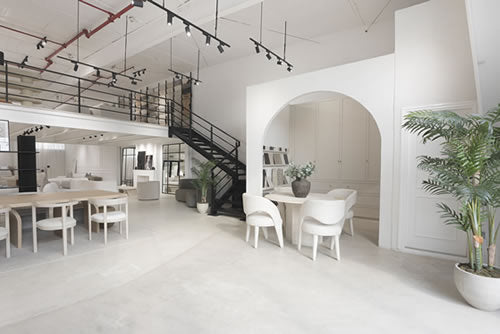
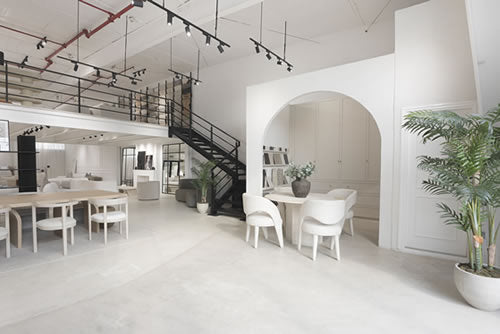
To see double sided sofas and other custom pieces in person, visit our custom furniture store in Dubai.
Showroom 22nd St, Al Quoz, Al Quoz Industrial Area 3, Dubai, UAE
Phone +971 50 111 6506
Email info@thedesignhousedubai.com